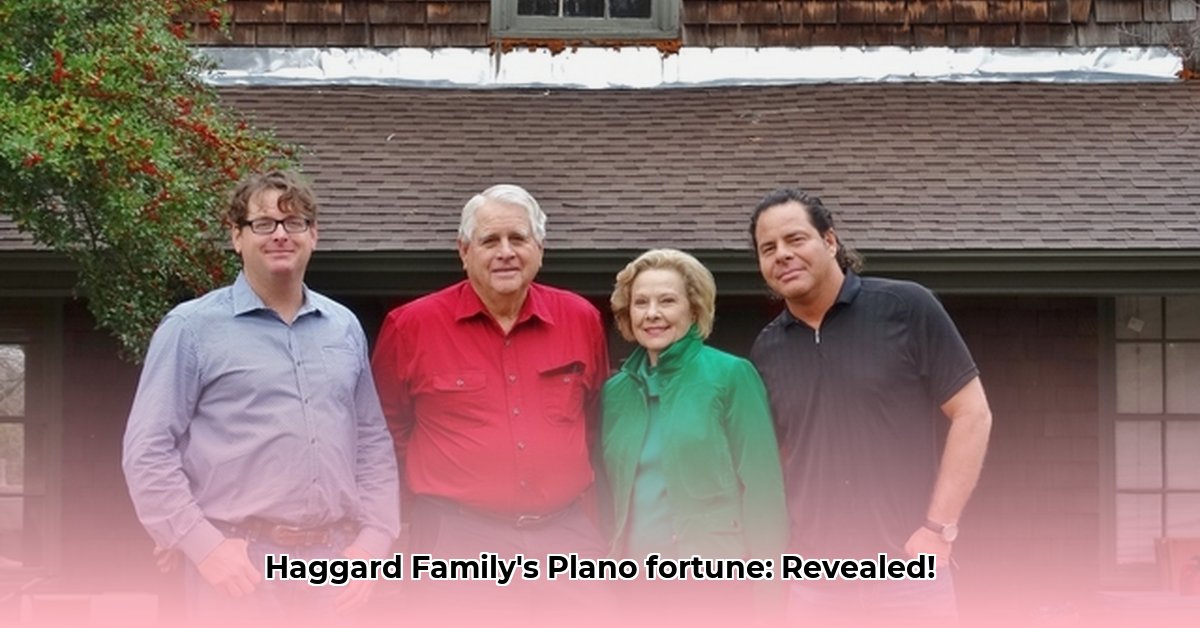
Haggard Farms: Transforming a Legacy into a Multi-Million Dollar Enterprise
The Haggard family, longstanding Plano residents, are at the forefront of a significant transformation in the city's landscape. Their 142-acre farm, a cherished piece of Plano's history, is undergoing a metamorphosis into a vibrant mixed-use development—Haggard Farms. This ambitious project promises not only to reshape the city but also to significantly alter the Haggard family's net worth. This article delves into the intricacies of this development, exploring its financial mechanisms, community impact, and potential risks and rewards for all stakeholders. For comparison, learn about other family's net worth transformations by exploring this resource.
Understanding Haggard Farms: A Mixed-Use Vision
Haggard Farms is envisioned as a fully integrated community blending residential, commercial, and recreational spaces. Imagine a place where residents can live, work, and play, all within easy walking distance. This innovative approach to urban planning aims to create a thriving hub, seamlessly integrating modern amenities with the historical significance of the land. The direct involvement of the Haggard family ensures the development aligns with their vision and respects the land's rich past. But how will this translate to a quantifiable impact on their family's wealth?
Public Improvement Districts (PIDs): Funding the Future
Large-scale developments necessitate substantial upfront investment. Haggard Farms leverages Public Improvement Districts (PIDs)—a financing mechanism where the city and developers share the cost of infrastructure improvements. The city invests in essential infrastructure like roads and utilities, anticipating increased tax revenue from the development's success. This shared responsibility reduces the financial burden on the Haggard family and their development partners, Stillwater Capital. However, the success of the PID model is contingent upon the project's overall economic viability. Will the anticipated tax revenue materialize, ensuring the long-term financial health of both the project and the city itself?
Plano's Real Estate Market: A Crucial Factor
The ultimate success of Haggard Farms hinges on the strength of Plano's real estate market. Currently, the market enjoys high demand for office and flexible workspaces, a positive indicator for the development's prospects. However, economic fluctuations pose a significant risk. A market downturn could negatively impact occupancy rates and potentially hinder the project's overall return on investment (ROI) – directly affecting the Haggard family's financial gains. How resilient will the local market prove to be amidst broader economic uncertainty?
Community Engagement: A Foundation for Success
The Haggard family and their development team have prioritized community engagement, recognizing its importance for a successful project. The development's design incorporates smaller, three- and four-story buildings to minimize disruption and integrate seamlessly with the existing neighborhood. This thoughtful approach aims to foster positive community relations, enhancing the project's appeal to potential residents and businesses. This proactive engagement minimizes potential conflicts and enhances the likelihood of achieving the desired return on investment, positively impacting the Haggard family's net worth. How effectively has community engagement contributed to the development's positive reception?
Project Timeline and Phased Approach
Construction commenced in May 2023, following a phased approach. This strategic plan allows for adaptability based on market feedback and changing economic conditions. The project's long-term success is dependent upon factors like tenant acquisition, sustained occupancy rates and adaptability to changing market demands. How precisely will the phased development mitigate potential risks and maximize the long-term profitability for the Haggard family?
Navigating Risks: Potential Challenges
Like any large-scale development, Haggard Farms faces potential challenges. The primary risks include market fluctuations affecting office and retail space demand, construction delays, shifts in local regulations, and the need to maintain solid community support throughout the project's lifespan. These inherent risks could potentially impact the Haggard family’s anticipated financial rewards. How robust are the mitigation strategies in place to ensure the project's financial stability?
Stakeholder Analysis: A Collaborative Endeavor
Numerous stakeholders contribute to Haggard Farms' success. Stillwater Capital spearheads development, the City of Plano plays a crucial role in infrastructure development and permit approval, and the Haggard family's vision provides the project’s anchor.
| Stakeholder | Short-Term Goals | Long-Term Goals |
|---|---|---|
| Stillwater Capital | Obtain necessary permits, start construction, track market interest | Complete construction, manage tenant acquisition, reach maximum profit |
| City of Plano | Monitor PID financial health, assure building codes are met | Assess growth in tax revenue, identify future infrastructure needs, and ensure community well-being |
| Haggard Family | Maintain positive community relationships, preserve historical significance | Secure their family legacy, potentially create historical displays |
The Haggard family's financial future is intrinsically linked to this development's success. It represents a significant gamble on Plano's future and underscores the potential of well-planned mixed-use developments that honor historical context. While the ultimate outcome remains uncertain, the Haggard family's legacy in Plano is undeniably shifting.
- Three Pivotal Points:
- The success of Haggard Farms directly impacts the Haggard family's net worth, dependent on market demand and efficient risk management.
- The Public Improvement District (PID) financing model shares risk and rewards between the developers, city, and residents.
- Community engagement and maintaining positive relationships are critical for the project's overall success and financial viability.